Subscribe To http://fr.scribd.com/doc/129823671/%D8%A7%D9%84%D8%A3%D9%8A%D8%A7%D9%85-%D8%A7%D9%84%D


 Posts
All Comments
Posts
All Comments
Wednesday, December 20, 2023
Aicha by Sanaa El Alaoui


Tuesday, June 06, 2023
Donia Idris,actor


<script async src="https://pagead2.googlesyndication.com/pagead/js/adsbygoogle.js?client=ca-pub-1636928317145917"
crossorigin="anonymous"></script>Tuesday, May 30, 2023
Al-Qarawiyyin library or the oldest one in the world


<script async src="https://pagead2.googlesyndication.com/pagead/js/adsbygoogle.js?client=ca-pub-1636928317145917"
crossorigin="anonymous"></script>Wednesday, May 10, 2023
Sanaa El Alaoui honored in Oxford

Sanaa is born in a millennium town called Salé near Rabat in Morocco. She studied in a school in Tabriket and then went to the college of Hassan the Second in Rabat. From her brilliant beginning in this school, her tutors noticed her commitment to study and great interest to literature and Arts namely English language. Sanaa had brilliant marks and in fact, she had valuable support by the Moroccan Academy of Students based in Rabat, and admitted in Eotvos Lorand University in Budapest, Hungary to apply for a Bachelor’s degree there. Sanaa‘s bachelor Thesis was long takes and Continuity in filmic language.


Academic
dress is obligatory at formal University ceremonies. This form of robes and
hoods designated to the different subjects and degrees may be traced back to
medieval Europe, when dress marked out to the rank and profession of the
wearer. The Robes worn today are much the same as those worn in the 16th
century. Sanaa, we are proud of you.
Written By Allal El Alaoui

<script async src="https://pagead2.googlesyndication.com/pagead/js/adsbygoogle.js?client=ca-pub-1636928317145917"
crossorigin="anonymous"></script>Thursday, December 15, 2022
Lamhali by Allal El Alaoui selected in Laâyoune in 2022

For the participation of my film "لمحالي" in the 6th edition of the Documentary Film Festival on Culture, History and the Sahrawi Hassani Space of Laâyoune ; this film is praised by a large audience from Sahara and it will be projected on the sceen on the 20th of decembre 2022 in Laayoune . Lamhali is written by Ali SALEM Yara , directed by Allal El Alaoui and produced by Network agency spearheaded by Ali Oualeddah.
From December 19 to 25, 2022, CCM , the Moroccan Film Center will organize the sixth session of the Documentary Film Festival on Culture, History and the Hassani Sahraoui Field in the city of Laâyoune. with this subject, and the creation of a space for meeting and dialogue between filmmakers from all over the Kingdom, in order to value the Moroccan cultural identity and to enhance the radiation of an essential tributary of the civilization, culture and history of the Kingdom of Morocco. It should be noted that these films will compete in the framework of a competition an official decision by a jury consisting of five personalities related to the field of cinema in general at the closing ceremony of the festival, the following awards will be awarded: Grand Prize, Jury Award, Best Direction Award, Best Editing Award, Best Music Award.
Saturday, November 19, 2022
Paolo Sorretino meets Allal el alaoui

It was during the end of the projection of the long featured film called the blue caftan directed by Mariem Touzani
that I took the opportunity to meet Paolo Sorretino the cinematic icon of Italian cinema and probably now he has become the European symbol of cinema as well .
Paolo
Sorrentino was born in Naples in 1970. One Man Up, his first feature –length
film, had its festival in 2001, and marked the start of his collaboration with
the actor Tony Servillo, with whom Sorrentino went on to make several films .All
of his subsequent fix features were selected for the Official Competition at
the Festival of Cannes; The consequences
of Love, the family friend ,il divo,which won the Jury Prize ,this must be the
place ,shot in the United States and featuring Sean Penn and Frances MacDormand
,the great beauty ,which won both the
academy award and the golden globe award for the best foreign language film .
<script async src="https://pagead2.googlesyndication.com/pagead/js/adsbygoogle.js?client=ca-pub-1636928317145917"
crossorigin="anonymous"></script>Tuesday, November 01, 2022
wedding of Moroccan filmmaker Sanaa El Alaoui

<script async src="https://pagead2.googlesyndication.com/pagead/js/adsbygoogle.js?client=ca-pub-1636928317145917"
     crossorigin="anonymous"></script>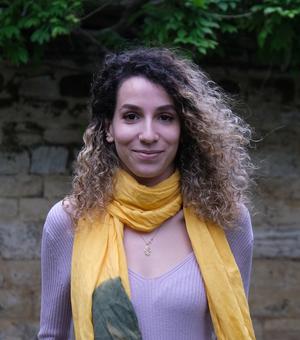
I recently graduated with a first-class degree in English and American studies with a specialisation in Film & Culture from the University of Eötvös Loránd in Budapest, where I was awarded the Outstanding Thesis Award for my dissertation “Long takes and Continuity in the Narrative of Filmic Language”. The latter explores the ontology of the film image and its relation to the spatiotemporal aspect in the filmic narrative. Particularly, my work investigates the poetic nature of the long take as a technical and aesthetic instrument providing a new reality in the narrative and contributing intellectually to the development of the viewer’s metacognition.
My cinephelia comes from my deep fascination of the infinite scope of what the film image can offer from its very beginnings either psychologically, aesthetically, or academically; and its predominant role in engaging the audience considering that their participation became a new way of addressing filmmaking techniques. The Master of studies in Film Aesthetics at the University of Oxford is indubitably a prosperous course in its provision of a wide collection of resources and its efficient programme structure in shaping the necessary analytical skills in addressing film form, film criticism, film theory and philosophy. Equally important is being an Ertegun scholar where I engage in a diverse community of intellectuals with different humanistic disciplines. After all, the cinema is a universal language and a cultural institution, it is the seventh art that has developed in close interactions with wide variety of humanistic disciplines.
Relatively, my current research interest tackles national identity in colonial and postcolonial Moroccan cinema. During the zenith of colonialism, films were used as means of propaganda to legitimise, prolong, and represent the colonial rule within and beyond North Africa. Therefore, I am interested in addressing the issue of the reification of Moroccan national cinema, situating it in a historical and contemporary context, while exploring the controversial debate of the ambiguity of not having ‘a Moroccan National Cinema’
Sunday, October 23, 2022
Siga by Rabii El Jawhari

.jpg)
Siga
Moroccan Post Narrative Movie
Siga is a film written and directed by Rabii El Jawhari, produced by
Mustapha Bouhalba. It was premiered in Dakhla, Rabat, Ouarzazate, Ouazzane and
Tanger and it is now about to be released in Morocco on November 2, 2022. It is
worth seeing owing to its wonderful action scenes, different Moroccan music
from Amazigh, Hassani, Rifi and Arabic styles, love stories and many more. El
Jawhari wrote this movie after he had attended the festival of Geneva in 2013
where he screened one of his documentaries. He found himself there confronted with
many false claims constructed by a propagandized documentary film. He publicly
discussed the film with his filmmaker who could neither prove his claims nor refute
El Jawhari’s historical evidence. World journalists wrote about that event
seeing that they for the first time hear about the strong interaction between
all Moroccan areas, namely the far north with the south.
This is how El Jawhari has decided to write this movie to explain the
Moroccan cause. Unfortunately, the screenplay was rejected so many times from
the committee of funding though it defends the Moroccan cause and refutes the
colonial and propagandized claims against the Moroccan Sahara. Bouhalba decided
to produce this movie at his own expense and he started shooting directly after
the strict lockdown caused by Covid 19, which was very hard since the movements
within the country in particular and the world in general was still hard. Siga’s
post production was completed and premiered in several Moroccan cities where
the audiences liked the film. The press, moreover, accompanied this success,
but unfortunately the committee of the cinematic fund rejected it again without
any logical reason.
Siga tells the story of Abdelghafour (Houcine Bouhcin), a Moroccan
journalist who writes about the historical and familial links between the north
and the south of Morocco. Al Batal (Tawfiq Charaf Eddine), a chief of a militia
group in Tindouf, kidnapped Abdelghafour and separated him from Fatimato
(Fadila El Hamel), a girl whom Abdelghafour loves so much. Abdelghafour spends
more that 20 years in horrible prisons that are unprecedented in world history.
One day, Abdelghafour addresses his torturer, “if you lived in Morocco, you
would be much better than me”. This marks a disruption in Al Batal’s
psychological state because it stimulates his unconscious cultural heritage.
El Jawhari creates a loophole
rather than a logical transition to allow his audience access directly to the
mind of Al Batal. He does not opt for the flashback technique to link between
the different eras in Siga, but rather gives the chance to the audience to feel
just like Al Batal does when he experiences sudden emotional, unexpected and
abrupt transitions from the present time to the 13th or 19th
centuries when his ancestors lived. El Jawhari wants to give two levels of his
narrative. The first one is fragmented. It signifies the theme of separation
that stands for the polisario, while the second level conveys the strong
energetic continuity amongst these stories in the mind of Al Batal who turns
out to be someone who reflects the Moroccan cultural heritage before it is
manipulated by colonization. The narrative apparently is fragmented but, in its
core and depth, it is linear. This is to indicate that Al Batal, who suffers
bipolar symptoms, will transcend the psychological disruption caused by
colonization and opt for being coherent with his convictions, leading him to
escape from Tindouf along with Abdelghafour. It is this situation according to
which El Jawhari constructs his filmic narrative. Siga, therefore, is
considered to be a “post narrative” film because El Jawhari interweaves
fragmentation with linearity. For him, his narrative imitates the Moroccan
Fusaifisae (tiles/mosaic) that makes its viewer think at first glance that it
is nothing but fragments of shapes and colors. The same viewer, eventually,
discovers the interrelated and dynamic meaningful shapes that generates new
shapes in an ongoing process just like the different facades of the same
crystal. This is how Siga is filmed.
Siga’s audiences admire very much the way the actors deal with their different roles. They excel in changing from one situation to another and suggest wonderful moments which the audiences appreciate a lot. Some of these great actors are: Houcine Bouhcine, Fadila EL Hamel, Tawfiq Charaf Eddine, Fatima Bouchan, Sidi Ahmed Chaggaf, Mohamed Bhiaj, Sara Dryouch, Mustapha Zghari, Thami EL Hani, Hamada Amlogou, Mustapha Toubali, and many more.
by: Allal El Alaoui
Rabii El Jawhari
Friday, September 23, 2022
Abelhak Najib's visions

My whole life has taken place in a very small perimeter named El Koudia block in Hay Mohammadi.
Show women that their bodies are sublime and that you have to enjoy them to the marrow.Tell men that women are insatiable and that you have to fuck them to death to thank them for having carried us in their bellies.
To forget, I had the books and the cinemas. There, where I didn't hear my pain in those of others, all these heroes, who one day or another, touched the ground like me to defend a dream. What I hated above all were the endless queues in front of the Saâda cinema (happiness, just that) or the Sheriff cinema.
Abelhak Najib
Monday, September 05, 2022
Cinema of Tangiers

One day, a few years later, those who remained in our
group, those who had resisted the sirens of Tangier and who had clung to the
banns of Ibn Khatib to slip timidly out of the walls of Bab el Fahs, towards
the third circle.
The Rex cinema was heavily overhanging the Grand
d'Occident, a mentally impassable border between us and the European world.
from the third circle, not knowing where to head between Mauritania, Goya, Roxy
and Lux…the four cardinal points of our imminent cinephilia.
It was the end of the magic and the beginning of a
beautiful love story with the image.
Saturday, July 09, 2022
Allal El Alaoui sings Katyusha in warsaw

Monday, December 06, 2021
lamhali by Allal El Alaoui

......."A focused shot on the tent with the sounds of wind whistling that scatter the tent rope. In front of the tent door, a woman is standing. A few meters away from that, two men stand. The owner of the tent Mahmoud is with someone, everyone is standing and staring at a far place, waiting"
This long feature isproduced by Netzwor qgenncy speaheaded by Ali Bosola and this film is directed Allal El Alaoui<
Monday, November 15, 2021
The Amis de Cinéma de Tétouan renew their executive board

The Association of Friends of Cinema of Tetouan (ACT) held a general assembly to renew its executive board. And this Saturday, November 13, 2021, at the National School of Fine Arts in Tetouan, in compliance with the prescriptions issued by the health authorities.
After welcoming the audience, critic and translator Abdellatif Bazia spoke about the background to the general assembly. After which, the associative actor Mohammed Hani intervened to specify the objectives of the ACT during the period to come, to encourage to face the pandemic of the coronavirus and to insist on the normal space of cinematographic projections that are the cinemas. He spoke of the harmony, coherence and exchange that reign in ACT and called for promoting the association with young executives so that it can strengthen and develop.
The former executive board then resigned and novelist and screenwriter Bachir Damouna chaired the session. A new board was unanimously elected:
- Mohamed BouissefRekab: President
- Mohammed Berrada: Deputy Chairman
- Nada Lmisri: Deputy Vice-President
- Mohammed Elhani: Secretary General
- WissalHamdach: Deputy Secretary General
- Maha El Guenni: Treasurer
Members of the new board expressed pride in the trust that members of the association have placed in it and their willingness to work and work in a spirit of responsibility. And at 7:00 p.m., Mr. Bachir Damoun declared the general assembly closed.
Founded on June 6, 1986, the ACT aims to:
- disseminate and develop cinematographic and creative interests,
- contribute to the development of a critical and objective awareness focusing on the components and aesthetics of the cinematographic phenomenon,
- create links between the cinematographic movement in Morocco and other cinematographic experiences,
- establish a framework for dialogue between the different components of the Moroccan cinematographic movement.
And to achieve these objectives, ACT has organized the Tetouan Mediterranean Film Festival since its creation, colloquiums, conferences and training in the field of the 7th art, film events in collaboration with associations and national and international bodies. with common interests. She periodically publishes the film magazine Wachma and other books and periodicals. It also produces the essay films and amateur films.
Tuesday, May 18, 2021
The Tetouan Mediterranean Film Festival in digital format

Nada LMISRI
Given the conditions experienced by the whole world because of the Covid-19 pandemic, and with the objective of adapting to this new situation of health crisis, the 26th edition of the Mediterranean Film Festival of Tetouan, which should have been held take place from March 21 to 28, 2020, will be held in digital format. And this from June 4 to 10, 2021.
According to the FCMT press release, the organizers have decided, in consultation with their partners, to organize a 26th reduced edition in digital format. In this sense, direct access to the films scheduled for the 2021 edition will be offered to the public. These films will be available on the Festival Scope platform. The FCMT therefore invites its public to visit its website (renewed and updated) where it will find all the information relating to the cultural program and film screenings (www.festivaltetouan.org).
The FCMT offers its public, passionate about the seventh art, competitions (feature films and documentaries), a conference under the theme “Cinema and painting, border or porosity? », The Carte Blanche and Coup de cœur program. The organizers are also planning to organize a meeting under the theme "How could festivals participate in the return of cinema?" and a master class which will be led by Moroccan director Mohamed ChrifTribak.
The names of the three juries, which will render the last verdict to award the prizes to the winners of the festival at the closing, are specialists and professionals of international renown, recognized for their great contribution and important contribution to Mediterranean cinema.
The jury for the feature films competition will be composed of Jacques Trabi, Laval Lozano, Mohamed Laroussi and Mogamed El Baz. The jury for the documentary films competition will be chaired by Marion Stalens who will be accompanied by Fanny Aubert Malaurie, IritNeidhardt, Hamid Benamra and Fathi Kharat, while the critical jury will include NasriHajjaj, Adil Semmar, Amal Al Ajmal and Laila Charadi.
The FCMT is an annual film event with the objective of revealing and promoting Mediterranean cinematographies in a spirit of exchange, sharing and conviviality. It was founded by the Association Amis de Cinéma de Tétouan (ACT) in 1987. Its first editions were organized in the form of film meetings in Tetouan. And each year, this cinematographic event, which is a remarkable success and a significant craze on the part of moviegoers and which has become the most popular cultural and artistic heritage in Tetouan, presents its Moroccan audience and its guests with a rich and varied program. : official competitions, special sessions, tributes, master class, international conference, retrospective, guest from the Mediterranean, training courses for teachers, '' children / young people '' screenings, '' At the festival school '' program, program '' Plateau '' (script writing), round tables, etc.
Despite the health crisis, the organizers of the FCMT intend to further develop the educational function of the festival, to assert it more and to scaffold projects (screenings, debates, round tables, workshops ...) inciting their audience, mainly young people, to s '' ask about the new problems and phenomena (social, health) that impact and influence our daily lives. They want things to get back to normal soon so that they can organize the 27th edition under better conditions. "In the meantime, we continue to work to make the distance that separates us more accessible and rich in fruitful exchanges and productive sharing," they note.
Friday, January 22, 2021
Abdilah Zirat announces the Jury prize for Sanaa El alaoui
Synopsis en Français
À Budapest, en Hongrie, Ignac vit sans-abri dans une société sophistiquée et aliénée. Ignac partage son enfance avec nous et rêve de devenir pilote. Cependant, sa vie devient plus difficile dans une société où la lutte sociale est très marquée. Ignac poursuit en parlant de ses visions de l'itinérance, de Dieu, du bonheur et du suicide. Malgré son statut social et sa solitude, Ignac est un homme intelligent et autodidacte.
Synopsis en Anglais
In Budapest, Hungary, Ignac lives as a homeless in a sophisticated and alienated society. Ignac shares his childhood with us and he dreams to be a pilot. However, his life becomes harder in a society where social struggle is highly marked. Ignac goes on to talk about his visions toward homelessness, God, happiness and suicide. Nevertheless his social status and loneliness, Ignac is a smart and self-educated man.
workshop on screenwrriting in Arabic
<iframe width="560" height="315" src="https://www.youtube.com/embed/biib2Qf1vfU" frameborder="0" allow="accelerometer; autoplay; clipboard-write; encrypted-media; gyroscope; picture-in-picture" allowfullscreen></iframe>
Tuesday, January 05, 2021
Sanaa El Alaoui awarded the the Integrated Work Award in Festival National Du Cinéma De La Marge 2020

In Hungary, and precisely in Hungary, an old man named "Egnac" lives as a homeless person in a sophisticated and complex society. This man tells about his childhood in a complex environment and continues to speak about himself intelligently, referring to homelessness, to the concept of God in his belief and the escalation of suicide in his country and, despite his difficult social situation and his sense of loneliness, Egnac remains a distinguished intellectual who lives and coexists in his city Budapest with an enlightened thought and dreams that one day he will fly in the sky like the mythical bird "Icarus".
This is a summary of the film that was admired by the jury of the Eighth National Forum for Cinema Al-Hamish in the city of Guercif, headed by director and critic Abdel-Ilah Al-Jawahry. Its director, Sanaa El-Alaoui, was awarded the Integrated Work Award for the session that the organizers intended to digitally hold under the slogan “Cinema in the Time of Stone between the Rites of Revelation and the Digital Invasion” over a period of three days from 26-27-28 December 2020 due to the pandemic conditions afflicting the country. The judging committee for the session was formed by director Abd El-Ilah Al-Jawahry as president, and the membership of each of the actress Manal Al-Siddiqi and the journalist Issa Wehbe.
The closing ceremony was broadcast live on the official pages of the Silver Screen Association on social media. During this period, the official competition prizes, which included ten films, were announced.
The competition prizes came as follows: The Integrated Work Award won by director Sanaa El-Alaoui for the film "icarus".
The screenplay prize goes to the film “The Philosopher” by Moroccan director Abdellatif Afdil.
The Best Female Diagnostic Actress Award was returned to actress Rania Al-Shani for her role in the short fictional film “Perfume”, where she was co-starred by the artist Saeed Bey and directed by Hussein Al-Shani.
The best actor award went to Rachid Ammari for his role in the movie “Blood and Charcoal”.
The award for best direction is returned to director Mostafa Armani for his film “The Last Wave”. The jury noted the experience of director Fatima Aklaz in her film "The Stick."
In addition to the films participating in the official competition, «Cococoku Lahcen Maanani - Baraka - Anas Hastak - Sharkh - Bilal Al Tawil - Parfum - Hussein Shani - The Lost Dream - Rashid Ammari - The Last Wave - Mustafa Farmati - The Philosopher - Fadel Abdel Latif - Blood and Charcoal - Tariq Rasmi - The Wand - Fatima Aklaz.
The course featured workshops in the script by director Allal Al-Alawi, and a workshop on artistic make-up by Azhar Al-Issawi. Ahmed Al-Sijjilmasi, a film critic and journalist interested in cinema history in Morocco, presented a window on documenting cinematic memory in Morocco.
Regarding the scientific symposium “Cinema in the Time of Stone between the Rituals of Watching and the Digital Invasion”, the success of the organizers was confirmed on two fronts: choosing the forum theme, considering its current and sensitivity, as well as the balanced elite of academic researchers and experts in the field.
Dr. Hisham El-Makki, the facilitator of the seminar's paragraphs, succeeded in stitching ideas together, weaving them, and compiling their abstracts in a way that can be understood and received by default. It receives the ideas and conclusions received from the director, scriptwriter and critic Professor Ezz Al-Arab Al-Alawi, critic and film researcher Dr. Al-Habib Al-Nassiri and Dr. Khaled Taha, and the researcher in media, communication and cultural studies Dr. Mustafa Lamerit within three axes that formed the basis of the symposium.
What are the dimensions and limits of the effects of these transformations on the physiological, mental, psychological, social and spiritual health of the spectator? What are the limits of the success of initiatives to bring the audience back to regular theaters through the "open-air cinema experience"? Can it be a future alternative?
The second axis: cinema and the digital conquest How overwhelming is the Internet for cinema? What are the limits of the success of online viewing services? What is the nature of the dramatic themes that creative people will present? What are the future limits of the divide between the real and the virtual in the film industry? Can digital platforms provide a film product that respects and maintains the peculiarities and nature of cinema? And to what extent will artificial intelligence, with algorithms for viewing platforms, contribute to the suggestion of films, the formation of aptitude, and their standardization in a society of fluid modernity values? The third axis: cinema and the time after Corona:
Based on this theoretical ground, this specialized symposium attempted to simplify this reality, diagnose and analyze, and open up possible horizons for thinking. Where the interveners agreed, from the angle of his competence, that what humanity is experiencing today is a global event that imposed a set of health measures, including physical distancing and home quarantine, in several countries as a precaution against infection with the virus. A crisis based on quarantine and restriction of movement, and the denial of some human rights with all their repercussions and impacts on the individual and the institution, especially with citizens leaving public spaces, preventing them from wandering and mixing in streets and alleys and accessing clubs, cabarets, cafes and public spaces, including cinemas and international and local film festivals that found themselves It is forced to suspend its offers and activities for an indefinite period in order to preserve the safety of its users.
And they recorded the reflections of this new reality with its multi-level effects in the cinematic industry, which made the film season exceptional by all standards in terms of canceling some international awards and festivals, amending the dates of most of them, and forcibly adapting the laws of some of them, and for the first time in the history of the screening of films broadcasted on different platforms were allowed to qualify To get the Oscars, without the need to display them in theaters. Individual watching rituals have also been affected by changing habits, by people resorting to alternatives to their usual practices during quarantine, and by the increase in home views of cinematic films through the sites and platforms available in many of them for free.
The symposium concluded that despite the darkness of this picture of the cinematic scene, there is a general tendency to adapt to this situation by temporarily dispensing with external photography, and taking precautions and health measures inside closed studios, and the increasing frequency of
Translated by Ali Karama from the Journal Ittihad Al Chtiraki writtten by Aziz Bakouche
https://www.cinemalamarge.ma/?fbclid=IwAR050-t5hFKWdBHIH3gtDiF_9GB9wm2e3cYPRoguF14AgjgSG5OKtiyalxE
BEST SHORT FILM - DOCUMENTARY in California (Queen Palm)

Queen Palm International Film Festival's mission is to discover diverse new voices and to promote artists' work through numerous platforms.
Queen Palm International Film Festival is a quarterly film, music, & screenwriting competition with a live Annual Screening and Awards Show Event in Palm Springs, California. QPIFF honors films from around the world with a vast array of awards in different categories and genres. Each quarter, Filmmakers can submit their projects to have them judged by award winning industry professionals and compete with other filmmakers across the globe.
All quarterly winners receive a stunning certificate & laurels (We award Gold, Silver, Bronze, & Honorable Mention in each category) and all of our Gold winners are automatically entered into our Annual Competition & Awards Show Event held in beautiful Palm Springs, where they will compete for a chance to win a prestigious Queen Supreme trophy and other amazing prizes.
Our jury will select a collection of our top Gold winning films from our quarterly editions to screen at our Live Annual Event. QPIFF also hosts two additional live Premiere Screening Events (jury invitation only) in Palm Springs (Winter and Spring) for quarterly selected films that are World, US, California or Palm Springs Premieres.
Monday, October 19, 2020
Bouchaib El Masoudi honors Sanaa El Alaoui in Algeria

In Budapest,
Hungary, Ignac lives as a homeless in a sophisticated and alienated society.
Ignac shares his childhood with us and
he dreams to be a pilot. However, his life beccmes harder in a society where
social struggle is highly marked. Ignac
goes on to talk about his visions toward homelessness, God, happiness
and suicide. Nevertheless his social status and loneliness, Ignac is a smart
and self-educated abandoned man.
Monday, August 31, 2020
Icarus by Sanaa El Alaoui in HOPE-FIRST FESTIVAL UNIVERSAL DE CORTOMETRAJES

<iframe width="560" height="315" src="https://www.youtube.com/embed/UKbC7XG7nOM" frameborder="0" allow="accelerometer; autoplay; encrypted-media; gyroscope; picture-in-picture" allowfullscreen></iframe>
Synopsis in Anglais
In Budapest, Hungary, Ignac lives as a homeless in a sophisticated and alienated society. Ignac shares his childhood with us and he dreams to be a pilot. However, his life beccmes harder in a society where social struggle is highly marked. Ignac goes on to talk about his visions toward homelessness, God, happiness and suicide. Nevertheless his social status and loneliness, Ignac is a smart and self-educated abandoned man.
Synopsis
en Arabe
في المجر وبالضّبط في هنغاريا ، يعيش رجل كهل
إسمه إكناك ، متشرّد في مجتمع متطور ومعقّد . ويحكي هذا الرّجل عن طفولته في محيط
يشوبه التعقيد ويواصل التحدّث عن نفسه بشكل ذكي مشيرا إلى التشرّد ، إلى مفهوم
الله في اعتقاده و تصاعد الانتحار في
بلاده . وعلى الرّغم من وضعه الاجتماعي العسير وشعوره بالوحدة ، يبقى إكناك رجلا
مثقّفا مميّزا يعيش ويتعايش في مدينته بودابيست بفكر متنيّر ويحلم أن يطيريوما في السّماء كالطّائر الأسطوري إكاروس .
Synopsis
en Français
À Budapest,
en Hongrie, Ignac vit sans-abri dans une société sophistiquée et aliénée. Ignac
partage son enfance avec nous et rêve de devenir pilote. Cependant, sa vie
devient plus difficile dans une société où la lutte sociale est très marquée.
Ignac poursuit en parlant de ses visions de l'itinérance, de Dieu, du bonheur
et du suicide. Malgré son statut social et sa solitude, Ignac est un homme
abandonné intelligent et autodidacte.
COMPARTID NUESTRO GRITO POR LOS SIN VOZ https://gf.me/u/x6hrc6
https://youtu.be/UKbC7XG7nOM


