<script async src="https://pagead2.googlesyndication.com/pagead/js/adsbygoogle.js?client=ca-pub-1636928317145917"
     crossorigin="anonymous"></script>
 Posts
All Comments
<script async src="https://pagead2.googlesyndication.com/pagead/js/adsbygoogle.js?client=ca-pub-1636928317145917"
     crossorigin="anonymous"></script>


<script async src="https://pagead2.googlesyndication.com/pagead/js/adsbygoogle.js?client=ca-pub-1636928317145917"
     crossorigin="anonymous"></script>
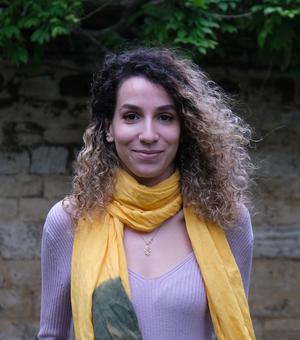
Sanaa is born in a millennium town called Salé near Rabat in Morocco. She studied in a school in Tabriket and then went to the college of Hassan the Second in Rabat. From her brilliant beginning in this school, her tutors noticed her commitment to study and great interest to literature and Arts namely English language. Sanaa had brilliant marks and in fact, she had valuable support by the Moroccan Academy of Students based in Rabat, and admitted in Eotvos Lorand University in Budapest, Hungary to apply for a Bachelor’s degree there. Sanaa‘s bachelor Thesis was long takes and Continuity in filmic language.


Academic
dress is obligatory at formal University ceremonies. This form of robes and
hoods designated to the different subjects and degrees may be traced back to
medieval Europe, when dress marked out to the rank and profession of the
wearer. The Robes worn today are much the same as those worn in the 16th
century. Sanaa, we are proud of you.
Written By Allal El Alaoui

<script async src="https://pagead2.googlesyndication.com/pagead/js/adsbygoogle.js?client=ca-pub-1636928317145917"
     crossorigin="anonymous"></script>

For the participation of my film "لمحالي" in the 6th edition of the Documentary Film Festival on Culture, History and the Sahrawi Hassani Space of Laâyoune ; this film is praised by a large audience from Sahara and it will be projected on the sceen on the 20th of decembre 2022 in Laayoune . Lamhali is written by Ali SALEM Yara , directed by Allal El Alaoui and produced by Network agency spearheaded by Ali Oualeddah.
From December 19 to 25, 2022, CCM , the Moroccan Film Center will organize the sixth session of the Documentary Film Festival on Culture, History and the Hassani Sahraoui Field in the city of Laâyoune. with this subject, and the creation of a space for meeting and dialogue between filmmakers from all over the Kingdom, in order to value the Moroccan cultural identity and to enhance the radiation of an essential tributary of the civilization, culture and history of the Kingdom of Morocco. It should be noted that these films will compete in the framework of a competition an official decision by a jury consisting of five personalities related to the field of cinema in general at the closing ceremony of the festival, the following awards will be awarded: Grand Prize, Jury Award, Best Direction Award, Best Editing Award, Best Music Award.

It was during the end of the projection of the long featured film called the blue caftan directed by Mariem Touzani
that I took the opportunity to meet Paolo Sorretino the cinematic icon of Italian cinema and probably now he has become the European symbol of cinema as well .
Paolo
Sorrentino was born in Naples in 1970. One Man Up, his first feature –length
film, had its festival in 2001, and marked the start of his collaboration with
the actor Tony Servillo, with whom Sorrentino went on to make several films .All
of his subsequent fix features were selected for the Official Competition at
the Festival of Cannes; The consequences
of Love, the family friend ,il divo,which won the Jury Prize ,this must be the
place ,shot in the United States and featuring Sean Penn and Frances MacDormand
,the great beauty ,which won both the
academy award and the golden globe award for the best foreign language film .
<script async src="https://pagead2.googlesyndication.com/pagead/js/adsbygoogle.js?client=ca-pub-1636928317145917"
     crossorigin="anonymous"></script>
<script async src="https://pagead2.googlesyndication.com/pagead/js/adsbygoogle.js?client=ca-pub-1636928317145917"
crossorigin="anonymous"></script>I recently graduated with a first-class degree in English and American studies with a specialisation in Film & Culture from the University of Eötvös Loránd in Budapest, where I was awarded the Outstanding Thesis Award for my dissertation “Long takes and Continuity in the Narrative of Filmic Language”. The latter explores the ontology of the film image and its relation to the spatiotemporal aspect in the filmic narrative. Particularly, my work investigates the poetic nature of the long take as a technical and aesthetic instrument providing a new reality in the narrative and contributing intellectually to the development of the viewer’s metacognition.
My cinephelia comes from my deep fascination of the infinite scope of what the film image can offer from its very beginnings either psychologically, aesthetically, or academically; and its predominant role in engaging the audience considering that their participation became a new way of addressing filmmaking techniques. The Master of studies in Film Aesthetics at the University of Oxford is indubitably a prosperous course in its provision of a wide collection of resources and its efficient programme structure in shaping the necessary analytical skills in addressing film form, film criticism, film theory and philosophy. Equally important is being an Ertegun scholar where I engage in a diverse community of intellectuals with different humanistic disciplines. After all, the cinema is a universal language and a cultural institution, it is the seventh art that has developed in close interactions with wide variety of humanistic disciplines.
Relatively, my current research interest tackles national identity in colonial and postcolonial Moroccan cinema. During the zenith of colonialism, films were used as means of propaganda to legitimise, prolong, and represent the colonial rule within and beyond North Africa. Therefore, I am interested in addressing the issue of the reification of Moroccan national cinema, situating it in a historical and contemporary context, while exploring the controversial debate of the ambiguity of not having ‘a Moroccan National Cinema’


Siga
Moroccan Post Narrative Movie
Siga is a film written and directed by Rabii El Jawhari, produced by
Mustapha Bouhalba. It was premiered in Dakhla, Rabat, Ouarzazate, Ouazzane and
Tanger and it is now about to be released in Morocco on November 2, 2022. It is
worth seeing owing to its wonderful action scenes, different Moroccan music
from Amazigh, Hassani, Rifi and Arabic styles, love stories and many more. El
Jawhari wrote this movie after he had attended the festival of Geneva in 2013
where he screened one of his documentaries. He found himself there confronted with
many false claims constructed by a propagandized documentary film. He publicly
discussed the film with his filmmaker who could neither prove his claims nor refute
El Jawhari’s historical evidence. World journalists wrote about that event
seeing that they for the first time hear about the strong interaction between
all Moroccan areas, namely the far north with the south.
This is how El Jawhari has decided to write this movie to explain the
Moroccan cause. Unfortunately, the screenplay was rejected so many times from
the committee of funding though it defends the Moroccan cause and refutes the
colonial and propagandized claims against the Moroccan Sahara. Bouhalba decided
to produce this movie at his own expense and he started shooting directly after
the strict lockdown caused by Covid 19, which was very hard since the movements
within the country in particular and the world in general was still hard. Siga’s
post production was completed and premiered in several Moroccan cities where
the audiences liked the film. The press, moreover, accompanied this success,
but unfortunately the committee of the cinematic fund rejected it again without
any logical reason.
Siga tells the story of Abdelghafour (Houcine Bouhcin), a Moroccan
journalist who writes about the historical and familial links between the north
and the south of Morocco. Al Batal (Tawfiq Charaf Eddine), a chief of a militia
group in Tindouf, kidnapped Abdelghafour and separated him from Fatimato
(Fadila El Hamel), a girl whom Abdelghafour loves so much. Abdelghafour spends
more that 20 years in horrible prisons that are unprecedented in world history.
One day, Abdelghafour addresses his torturer, “if you lived in Morocco, you
would be much better than me”. This marks a disruption in Al Batal’s
psychological state because it stimulates his unconscious cultural heritage.
El Jawhari creates a loophole
rather than a logical transition to allow his audience access directly to the
mind of Al Batal. He does not opt for the flashback technique to link between
the different eras in Siga, but rather gives the chance to the audience to feel
just like Al Batal does when he experiences sudden emotional, unexpected and
abrupt transitions from the present time to the 13th or 19th
centuries when his ancestors lived. El Jawhari wants to give two levels of his
narrative. The first one is fragmented. It signifies the theme of separation
that stands for the polisario, while the second level conveys the strong
energetic continuity amongst these stories in the mind of Al Batal who turns
out to be someone who reflects the Moroccan cultural heritage before it is
manipulated by colonization. The narrative apparently is fragmented but, in its
core and depth, it is linear. This is to indicate that Al Batal, who suffers
bipolar symptoms, will transcend the psychological disruption caused by
colonization and opt for being coherent with his convictions, leading him to
escape from Tindouf along with Abdelghafour. It is this situation according to
which El Jawhari constructs his filmic narrative. Siga, therefore, is
considered to be a “post narrative” film because El Jawhari interweaves
fragmentation with linearity. For him, his narrative imitates the Moroccan
Fusaifisae (tiles/mosaic) that makes its viewer think at first glance that it
is nothing but fragments of shapes and colors. The same viewer, eventually,
discovers the interrelated and dynamic meaningful shapes that generates new
shapes in an ongoing process just like the different facades of the same
crystal. This is how Siga is filmed.
Siga’s audiences admire very much the way the actors deal with their different roles. They excel in changing from one situation to another and suggest wonderful moments which the audiences appreciate a lot. Some of these great actors are: Houcine Bouhcine, Fadila EL Hamel, Tawfiq Charaf Eddine, Fatima Bouchan, Sidi Ahmed Chaggaf, Mohamed Bhiaj, Sara Dryouch, Mustapha Zghari, Thami EL Hani, Hamada Amlogou, Mustapha Toubali, and many more.
by: Allal El Alaoui
Rabii El Jawhari

My whole life has taken place in a very small perimeter named El Koudia block in Hay Mohammadi.
Show women that their bodies are sublime and that you have to enjoy them to the marrow.Tell men that women are insatiable and that you have to fuck them to death to thank them for having carried us in their bellies.
To forget, I had the books and the cinemas. There, where I didn't hear my pain in those of others, all these heroes, who one day or another, touched the ground like me to defend a dream. What I hated above all were the endless queues in front of the Saâda cinema (happiness, just that) or the Sheriff cinema.
Abelhak Najib

One day, a few years later, those who remained in our
group, those who had resisted the sirens of Tangier and who had clung to the
banns of Ibn Khatib to slip timidly out of the walls of Bab el Fahs, towards
the third circle.
The Rex cinema was heavily overhanging the Grand
d'Occident, a mentally impassable border between us and the European world.
from the third circle, not knowing where to head between Mauritania, Goya, Roxy
and Lux…the four cardinal points of our imminent cinephilia.
It was the end of the magic and the beginning of a
beautiful love story with the image.


This long feature isproduced by Netzwor qgenncy speaheaded by Ali Bosola and this film is directed Allal El Alaoui<

The Association of Friends of Cinema of Tetouan (ACT) held a general assembly to renew its executive board. And this Saturday, November 13, 2021, at the National School of Fine Arts in Tetouan, in compliance with the prescriptions issued by the health authorities.
After welcoming the audience, critic and translator Abdellatif Bazia spoke about the background to the general assembly. After which, the associative actor Mohammed Hani intervened to specify the objectives of the ACT during the period to come, to encourage to face the pandemic of the coronavirus and to insist on the normal space of cinematographic projections that are the cinemas. He spoke of the harmony, coherence and exchange that reign in ACT and called for promoting the association with young executives so that it can strengthen and develop.
The former executive board then resigned and novelist and screenwriter Bachir Damouna chaired the session. A new board was unanimously elected:
- Mohamed BouissefRekab: President
- Mohammed Berrada: Deputy Chairman
- Nada Lmisri: Deputy Vice-President
- Mohammed Elhani: Secretary General
- WissalHamdach: Deputy Secretary General
- Maha El Guenni: Treasurer
Members of the new board expressed pride in the trust that members of the association have placed in it and their willingness to work and work in a spirit of responsibility. And at 7:00 p.m., Mr. Bachir Damoun declared the general assembly closed.
Founded on June 6, 1986, the ACT aims to:
- disseminate and develop cinematographic and creative interests,
- contribute to the development of a critical and objective awareness focusing on the components and aesthetics of the cinematographic phenomenon,
- create links between the cinematographic movement in Morocco and other cinematographic experiences,
- establish a framework for dialogue between the different components of the Moroccan cinematographic movement.
And to achieve these objectives, ACT has organized the Tetouan Mediterranean Film Festival since its creation, colloquiums, conferences and training in the field of the 7th art, film events in collaboration with associations and national and international bodies. with common interests. She periodically publishes the film magazine Wachma and other books and periodicals. It also produces the essay films and amateur films.

Nada LMISRI
Given the conditions experienced by the whole world because of the Covid-19 pandemic, and with the objective of adapting to this new situation of health crisis, the 26th edition of the Mediterranean Film Festival of Tetouan, which should have been held take place from March 21 to 28, 2020, will be held in digital format. And this from June 4 to 10, 2021.
According to the FCMT press release, the organizers have decided, in consultation with their partners, to organize a 26th reduced edition in digital format. In this sense, direct access to the films scheduled for the 2021 edition will be offered to the public. These films will be available on the Festival Scope platform. The FCMT therefore invites its public to visit its website (renewed and updated) where it will find all the information relating to the cultural program and film screenings (www.festivaltetouan.org).
The FCMT offers its public, passionate about the seventh art, competitions (feature films and documentaries), a conference under the theme “Cinema and painting, border or porosity? », The Carte Blanche and Coup de cœur program. The organizers are also planning to organize a meeting under the theme "How could festivals participate in the return of cinema?" and a master class which will be led by Moroccan director Mohamed ChrifTribak.
The names of the three juries, which will render the last verdict to award the prizes to the winners of the festival at the closing, are specialists and professionals of international renown, recognized for their great contribution and important contribution to Mediterranean cinema.
The jury for the feature films competition will be composed of Jacques Trabi, Laval Lozano, Mohamed Laroussi and Mogamed El Baz. The jury for the documentary films competition will be chaired by Marion Stalens who will be accompanied by Fanny Aubert Malaurie, IritNeidhardt, Hamid Benamra and Fathi Kharat, while the critical jury will include NasriHajjaj, Adil Semmar, Amal Al Ajmal and Laila Charadi.
The FCMT is an annual film event with the objective of revealing and promoting Mediterranean cinematographies in a spirit of exchange, sharing and conviviality. It was founded by the Association Amis de Cinéma de Tétouan (ACT) in 1987. Its first editions were organized in the form of film meetings in Tetouan. And each year, this cinematographic event, which is a remarkable success and a significant craze on the part of moviegoers and which has become the most popular cultural and artistic heritage in Tetouan, presents its Moroccan audience and its guests with a rich and varied program. : official competitions, special sessions, tributes, master class, international conference, retrospective, guest from the Mediterranean, training courses for teachers, '' children / young people '' screenings, '' At the festival school '' program, program '' Plateau '' (script writing), round tables, etc.
Despite the health crisis, the organizers of the FCMT intend to further develop the educational function of the festival, to assert it more and to scaffold projects (screenings, debates, round tables, workshops ...) inciting their audience, mainly young people, to s '' ask about the new problems and phenomena (social, health) that impact and influence our daily lives. They want things to get back to normal soon so that they can organize the 27th edition under better conditions. "In the meantime, we continue to work to make the distance that separates us more accessible and rich in fruitful exchanges and productive sharing," they note.
Synopsis en Français
À Budapest, en Hongrie, Ignac vit sans-abri dans une société sophistiquée et aliénée. Ignac partage son enfance avec nous et rêve de devenir pilote. Cependant, sa vie devient plus difficile dans une société où la lutte sociale est très marquée. Ignac poursuit en parlant de ses visions de l'itinérance, de Dieu, du bonheur et du suicide. Malgré son statut social et sa solitude, Ignac est un homme intelligent et autodidacte.
Synopsis en Anglais
In Budapest, Hungary, Ignac lives as a homeless in a sophisticated and alienated society. Ignac shares his childhood with us and he dreams to be a pilot. However, his life becomes harder in a society where social struggle is highly marked. Ignac goes on to talk about his visions toward homelessness, God, happiness and suicide. Nevertheless his social status and loneliness, Ignac is a smart and self-educated man.
<iframe width="560" height="315" src="https://www.youtube.com/embed/biib2Qf1vfU" frameborder="0" allow="accelerometer; autoplay; clipboard-write; encrypted-media; gyroscope; picture-in-picture" allowfullscreen></iframe>

In Hungary, and precisely in Hungary, an old man named "Egnac" lives as a homeless person in a sophisticated and complex society. This man tells about his childhood in a complex environment and continues to speak about himself intelligently, referring to homelessness, to the concept of God in his belief and the escalation of suicide in his country and, despite his difficult social situation and his sense of loneliness, Egnac remains a distinguished intellectual who lives and coexists in his city Budapest with an enlightened thought and dreams that one day he will fly in the sky like the mythical bird "Icarus".
This is a summary of the film that was admired by the jury of the Eighth National Forum for Cinema Al-Hamish in the city of Guercif, headed by director and critic Abdel-Ilah Al-Jawahry. Its director, Sanaa El-Alaoui, was awarded the Integrated Work Award for the session that the organizers intended to digitally hold under the slogan “Cinema in the Time of Stone between the Rites of Revelation and the Digital Invasion” over a period of three days from 26-27-28 December 2020 due to the pandemic conditions afflicting the country. The judging committee for the session was formed by director Abd El-Ilah Al-Jawahry as president, and the membership of each of the actress Manal Al-Siddiqi and the journalist Issa Wehbe.
The closing ceremony was broadcast live on the official pages of the Silver Screen Association on social media. During this period, the official competition prizes, which included ten films, were announced.
The competition prizes came as follows: The Integrated Work Award won by director Sanaa El-Alaoui for the film "icarus".
The screenplay prize goes to the film “The Philosopher” by Moroccan director Abdellatif Afdil.
The Best Female Diagnostic Actress Award was returned to actress Rania Al-Shani for her role in the short fictional film “Perfume”, where she was co-starred by the artist Saeed Bey and directed by Hussein Al-Shani.
The best actor award went to Rachid Ammari for his role in the movie “Blood and Charcoal”.
The award for best direction is returned to director Mostafa Armani for his film “The Last Wave”. The jury noted the experience of director Fatima Aklaz in her film "The Stick."
In addition to the films participating in the official competition, «Cococoku Lahcen Maanani - Baraka - Anas Hastak - Sharkh - Bilal Al Tawil - Parfum - Hussein Shani - The Lost Dream - Rashid Ammari - The Last Wave - Mustafa Farmati - The Philosopher - Fadel Abdel Latif - Blood and Charcoal - Tariq Rasmi - The Wand - Fatima Aklaz.
The course featured workshops in the script by director Allal Al-Alawi, and a workshop on artistic make-up by Azhar Al-Issawi. Ahmed Al-Sijjilmasi, a film critic and journalist interested in cinema history in Morocco, presented a window on documenting cinematic memory in Morocco.
Regarding the scientific symposium “Cinema in the Time of Stone between the Rituals of Watching and the Digital Invasion”, the success of the organizers was confirmed on two fronts: choosing the forum theme, considering its current and sensitivity, as well as the balanced elite of academic researchers and experts in the field.
Dr. Hisham El-Makki, the facilitator of the seminar's paragraphs, succeeded in stitching ideas together, weaving them, and compiling their abstracts in a way that can be understood and received by default. It receives the ideas and conclusions received from the director, scriptwriter and critic Professor Ezz Al-Arab Al-Alawi, critic and film researcher Dr. Al-Habib Al-Nassiri and Dr. Khaled Taha, and the researcher in media, communication and cultural studies Dr. Mustafa Lamerit within three axes that formed the basis of the symposium.
What are the dimensions and limits of the effects of these transformations on the physiological, mental, psychological, social and spiritual health of the spectator? What are the limits of the success of initiatives to bring the audience back to regular theaters through the "open-air cinema experience"? Can it be a future alternative?
The second axis: cinema and the digital conquest How overwhelming is the Internet for cinema? What are the limits of the success of online viewing services? What is the nature of the dramatic themes that creative people will present? What are the future limits of the divide between the real and the virtual in the film industry? Can digital platforms provide a film product that respects and maintains the peculiarities and nature of cinema? And to what extent will artificial intelligence, with algorithms for viewing platforms, contribute to the suggestion of films, the formation of aptitude, and their standardization in a society of fluid modernity values? The third axis: cinema and the time after Corona:
Based on this theoretical ground, this specialized symposium attempted to simplify this reality, diagnose and analyze, and open up possible horizons for thinking. Where the interveners agreed, from the angle of his competence, that what humanity is experiencing today is a global event that imposed a set of health measures, including physical distancing and home quarantine, in several countries as a precaution against infection with the virus. A crisis based on quarantine and restriction of movement, and the denial of some human rights with all their repercussions and impacts on the individual and the institution, especially with citizens leaving public spaces, preventing them from wandering and mixing in streets and alleys and accessing clubs, cabarets, cafes and public spaces, including cinemas and international and local film festivals that found themselves It is forced to suspend its offers and activities for an indefinite period in order to preserve the safety of its users.
And they recorded the reflections of this new reality with its multi-level effects in the cinematic industry, which made the film season exceptional by all standards in terms of canceling some international awards and festivals, amending the dates of most of them, and forcibly adapting the laws of some of them, and for the first time in the history of the screening of films broadcasted on different platforms were allowed to qualify To get the Oscars, without the need to display them in theaters. Individual watching rituals have also been affected by changing habits, by people resorting to alternatives to their usual practices during quarantine, and by the increase in home views of cinematic films through the sites and platforms available in many of them for free.
The symposium concluded that despite the darkness of this picture of the cinematic scene, there is a general tendency to adapt to this situation by temporarily dispensing with external photography, and taking precautions and health measures inside closed studios, and the increasing frequency of
Translated by Ali Karama from the Journal Ittihad Al Chtiraki writtten by Aziz Bakouche
https://www.cinemalamarge.ma/?fbclid=IwAR050-t5hFKWdBHIH3gtDiF_9GB9wm2e3cYPRoguF14AgjgSG5OKtiyalxE

Queen Palm International Film Festival's mission is to discover diverse new voices and to promote artists' work through numerous platforms.
Queen Palm International Film Festival is a quarterly film, music, & screenwriting competition with a live Annual Screening and Awards Show Event in Palm Springs, California. QPIFF honors films from around the world with a vast array of awards in different categories and genres. Each quarter, Filmmakers can submit their projects to have them judged by award winning industry professionals and compete with other filmmakers across the globe.
All quarterly winners receive a stunning certificate & laurels (We award Gold, Silver, Bronze, & Honorable Mention in each category) and all of our Gold winners are automatically entered into our Annual Competition & Awards Show Event held in beautiful Palm Springs, where they will compete for a chance to win a prestigious Queen Supreme trophy and other amazing prizes.
Our jury will select a collection of our top Gold winning films from our quarterly editions to screen at our Live Annual Event. QPIFF also hosts two additional live Premiere Screening Events (jury invitation only) in Palm Springs (Winter and Spring) for quarterly selected films that are World, US, California or Palm Springs Premieres.

In Budapest,
Hungary, Ignac lives as a homeless in a sophisticated and alienated society.
Ignac shares his childhood with us and
he dreams to be a pilot. However, his life beccmes harder in a society where
social struggle is highly marked. Ignac
goes on to talk about his visions toward homelessness, God, happiness
and suicide. Nevertheless his social status and loneliness, Ignac is a smart
and self-educated abandoned man.

<iframe width="560" height="315" src="https://www.youtube.com/embed/UKbC7XG7nOM" frameborder="0" allow="accelerometer; autoplay; encrypted-media; gyroscope; picture-in-picture" allowfullscreen></iframe>
Synopsis in Anglais
In Budapest, Hungary, Ignac lives as a homeless in a sophisticated and alienated society. Ignac shares his childhood with us and he dreams to be a pilot. However, his life beccmes harder in a society where social struggle is highly marked. Ignac goes on to talk about his visions toward homelessness, God, happiness and suicide. Nevertheless his social status and loneliness, Ignac is a smart and self-educated abandoned man.
Synopsis
en Arabe
في المجر وبالضّبط في هنغاريا ، يعيش رجل كهل
إسمه إكناك ، متشرّد في مجتمع متطور ومعقّد . ويحكي هذا الرّجل عن طفولته في محيط
يشوبه التعقيد ويواصل التحدّث عن نفسه بشكل ذكي مشيرا إلى التشرّد ، إلى مفهوم
الله في اعتقاده و تصاعد الانتحار في
بلاده . وعلى الرّغم من وضعه الاجتماعي العسير وشعوره بالوحدة ، يبقى إكناك رجلا
مثقّفا مميّزا يعيش ويتعايش في مدينته بودابيست بفكر متنيّر ويحلم أن يطيريوما في السّماء كالطّائر الأسطوري إكاروس .
Synopsis
en Français
À Budapest,
en Hongrie, Ignac vit sans-abri dans une société sophistiquée et aliénée. Ignac
partage son enfance avec nous et rêve de devenir pilote. Cependant, sa vie
devient plus difficile dans une société où la lutte sociale est très marquée.
Ignac poursuit en parlant de ses visions de l'itinérance, de Dieu, du bonheur
et du suicide. Malgré son statut social et sa solitude, Ignac est un homme
abandonné intelligent et autodidacte.


Intertextuality
Inevitability
of arts from inter-textuality Mohammad Khosravi Shakib.
Department of Persian Language and Literature, Human Science
Faculty, Lorestan University, I. R. Iran. E- Mail: Khosravi_shakib@yahoo.com.
Accepted 29 November, 2012
Kristeva
coined the term, intertextuality in 1966, and since that time intertextuality
has come to have almost as many meanings as its users. It is no small task for
this paper to clarify what intertextuality means for Kristeva and her
mentor/colleague, Roland Barthes before criticizing their concept of
intertextuality and its application in interpretation. Because no rational and
coherent concept of intertextuality is offered by Kristeva and Barthes or by
their Epigoni, it will be concluded that intertextuality should be treated
using lexicon of sincere and intelligent humanists. This work will discuss and
analyze some types and theories of intertextuality, with examples. These
examples would be based on the definitions discussed in this paper, because it
is discovered in this research that there are conflicting views among scholars
on this topic. For instance, while some authors consider pictures as texts,
others do not. At the end of the work, it will be taken that any text is a new
tissue of past citations. Bits of code, formulae, rhythmic models, fragments of
social languages etc are passed into the text and are redistributed within it,
for there is always language before and around the text. Intertextuality, the
condition of any text whatsoever, cannot of course be reduced to sources or
influences of problem; intertext is a general field of anonymous formulae whose
origin can scarcely be ever located; of unconscious or automatic quotations,
given without quotation marks.
NTRODUCTION
Intertextuality
is a word coined by Julia Kristeva, a French linguist who has written much on
this topic. This word has a broader meaning in today′s context than the
theories she expounds in her seminal work on intertextuality which are
"word, dialogue and novel". Her notion of Intertextuality refers to
the literal and effective presence in a text of another text. ‘’A text’’,
according to her, ‘’is a permutation of texts, an Intertextuality in the space
of a given text, in which several utterances, taken from other texts, intersect
and neutralize one another” (Allen, 2000). Kristeva writes that horizontal axis
(subject-addressee) and vertical axis (text-context) coincide, bringing to
light an important factor: each word (text) is an intersection of word (texts)
where at least one other word (text) can be read (Kristeva, 1986). In Bakhtin′s
work, these two axes, which he calls dialogue and ambivalence, are not clearly
distinguished. Yet, what appears as a lack of rigor is in fact an insight first
introduced into literary theory by Bakhtin (1981). Any text is constructed as a
mosaic of quotation; it is the absorption and transformation of another. The
notion of intertextuality replaces that of intersubjectivity, and poetic
language is read as at least twice.
TYPES
OF INTRTEXUALITY
It must be
analyzed firstly two major types of Intertextuality, which are ekphrasis and
iconotext. Ekphrasis was defined by Tom Mitchel, Grant Scott and James
Hefferman as "the verbal representation of visual representation"
while David Carrier sees it as a "verbal 2 Int. J. English Lit.
re-creations of visual artwork" (Wagner, 1996, p.10). artwork"
(Wagner, 1996). By this definition, both authors mean that ekphrasis comes into
being when a writer describes a visual object such as painting or sculpture
with a verbal media such as a novel, poem, or other writings. This can be seen
in any literature that tries to describe or portray painting and sculpture, as
seen below: -The description of Achilles′s shield in Homer’s Iliad
-Shakespeare’s The rape of Lucree -Esfandiar Blindness in Shahnameh of Ferdoosi
in the Persian literature The underlying point here, however, is that the above
examples are pieces of literature that describe visual art works. This can also
be seen in the poetic description of works of arts, mostly painting in a
literary mode, and is the subject of James Hofferman′s recent perception survey
of a body of literature from Homer to Ashbery, that corroborates the struggle
between WORD and IMAGE.
According to Barthes, all ekphrasis is
notional, and seeks to create a specific image that is to be found only in the
text as its "resident alien" (Barthes, 1973). Ekphrasis stages a
paradoxical performance, promising to give voice to the allegedly silent image
even while attempting to overcome the power of the image by transforming and
inscribing it. For instance, painting does not have voice but when one
describes painting in writing, he is intentionally or unintentionally, directly
or indirectly giving voice to this painting. This brings us to the second
category of intertextuality called iconotext. It is the use of (by way of
reference or allusion, in an explicit or implicit way) an image in a text or
vice versa. Micheal Nerlich defines it as a work of art made up of visual and
verbal signs, such as Evelyne Sinnasamy′s novel with photographs, la femme se
decouvre, in which text and images form a whole (or union that cannot be
dissolved. But Alain Montandon sees it as a Work of arts in which writing and
the plastic element present themselves in an inseparable totality. Iconotext
can also exist in such works in which one medium is only implied, example, the
reference to a painting in a fictional text (Barthes, 1973). Examples can be
found in most newspapers, where articles sometimes carry pictures (Santaella,
1998). It can also be seen in story like One Thousand and One Night in which
pictures are used in various parts of the story to give image to the writing.
It should be noted that the said novel has been reproduced as film, but we will
come to that later when discussing film as an example of intertextuality.
SOME
THEORY OF INTERTEXTUALITY
Here, this paper wants to discuss the theories of intertextuality by Plato, Aristotle and Roman theorists, while giving some examples based on the understanding of the author. First theory is the Theory of imitation. According to Roman theorists, imitation presupposes reference to a pre-existent reality which is concrete as well as textual. Apart from the above authorities, Quintilian remarks that imitation is not repetition; it is an highlighting in which by reading and writing, the translator declares his/herself, while also engaging in a process of self-alienation. Joel Weinheimer argues that an imitation has no independent or autonomous essence. It is neither a copy nor an original. Now in the case of platonic imitation, the poet always copies an earlier act of creation, which is itself already a copy. Plato’s theories of poetry highlight intertextual relation. Certainly, the work of art, to Plato is not autonomous but crossed; for example, by various references to social knowledge like military tactics; divination, statecraft. Plato’s theory can be supported by most of the poems written as a result of the September 11 attacks on New York and Washington DC. We all know what happened, including the poets. It would not like to limit Plato′s theory to poetry; it can also be seen in other literariness like films. For instance, the film "The rise and fall of Idi Amin" which portrays the brutal and dictatorial regime of Idi Amin in post independent Uganda (Idi Amin was a totalitarian Ugandan leader, who was widely known for his brutality against his opponents. He was deposed from power in a military coup). They are many films about the first and second world wars, and the Persian Gulf War. In all these cases, we know what happened and we still watch and appreciate the film version of the events. These examples can help to explain Plato’s theory of imitation. According to Still and Worton (1990), Aristotle’s theory of imitation is rather different from Plato’s; for Aristotle, dramatic creation is the reduction, and hence intensification, of a mass of texts known to the poet, and probably to the audience as well. He holds that we learn, with great pleasure, through imitating, other than our instinct to enjoy works of imitation; it is inborn instinct (Still and Worton, 1990).
Both Cicero and Quintilian emphasize that
imitation is not only a means of forging one′s discourse but it is a
consciously intertextual practice (Bakhtin, 1986). This is so, because by
imitating a text, one tends to mix one’s ideas with the ideas contained in the
imitated text, thus leading to a product of hybridity. All the theories
discussed above are similar to the author’s point of view. They all underline
the fact that imitation has to do with texts known to the authors. It is
logical that one can not imitate something one does not know about. A good
example of an imitated work is the play of king Lear of Sheakeaspear which is
supposed to be copied from a Persian great tragedy called Feridoon in Shahnameh
and transplanted in some mythical context. The theory of quotation is the
second theory of intertxuality. Imitation leads us to the theory of quotation,
which is a common practice in academic work. According to Kristeva, reading is
aggressive participation and also that the reader escapable strives to
incorporate the quotation into the unified textuality which makes the text a
semiotic unit. The reader thus seeks to read the borrowing not only for its
semantic context but also fpr its topological or metaphoric function and
significance. It should be noted that one can find quotations in books and
articles without a quotation signs, and if one has no knowledge about these
quotations, one could read such work without knowing that it is borrowed from
other people’s material. For instance, in the film "Star Trek"
Shakespeare was quoted on many occasions. A case in point is "Sein oder
nicht sein (to be or not to be)" as in Hamlet.
Intertextuality in literature
Let us now discuss examples of intertextuality in African
literature by differentiating between African men′s and African women′s
literatures. This is because there exists an interesting parallel in both
literatures. This technique of intertextuality in African literature is called
writing back. Men′s literature A number of European who spent time in Africa as
missionaries, tradesmen, adventurers and colonial officials and even some who
never set foot on the Africa continent wrote novels set in Africa. Their
statements about African culture and people are deeply rooted in the colonial
mentality which is, according to Janmohammed "dominated by a Manichean
allegory of white and black; good and evil; salvation and damnation;
civilization and savagery; superiority and inferiority" (Bakhtin, 1981).
In accordance with this notion, colonialist authors reproduce the stereotyped
image of Africa as a "place of barbarism" and the myth of the
"burden of the white man" who is to bring light into the heart of darkness.
With their texts, colonialist authors legitimized the widespread fallacy that
Africa lacked culture, history or literature. It is hardly surprising that this
European blackmail of the "dark continent" elicited protest from
Africans. Achebe, a famous African creative scholar, goes on to say that he
later discovered that "...once that kind of enlightenment comes to you,
you realized that some one has to write a different story". In 1930, Sol
Plaatje heralded the age of these "different stories" of African
authors with his novel MHUDI. Since then, more and more African writers have
been creating an intertextual dialogue by putting the right perspective on
African culture in opposition to the view of colonialist literary text. The aim
is to correct the distorted literary depiction of African and questioning the
colonial mentality of Europeans and Africans as well. African writers created a
more differentiated and realistic picture of Africa and African men. In their
writings, the latter appear as complex individuals who possess dignity, history
and cultural identity and are not primitive, Shakib 3 dangerous and barbarous.
Salman Rushdie described with the words "the empire writes back with
vengeance". This critically intended intertextual dialogue received a name
"writing back". This is visible in Nkenjo Njumbam′s novel The white
man of God, where he highlights a conflict or clash between the Western and
African religion, making it clear that the African did not hear of religion
from the white man. Women’s literature In the pre colonial period, women were
totally marginalized by men in most African societies. In some communities,
women were considered as individuals whose main roles were to bear children,
raise them and take care of the house hold just like the situation of women in
Europe till the 18th century when these women changed their fate through
literary and political intertextuality (Bolter, 1991). The woman’s fate was
determined by father or husband. Women were generally portrayed negatively as dangerous
and malicious. Authors show discrimination view of women as inferior to men.
This notion was later challenged by African women writers who portrayed women
in a more differentiated and realistic way than their male colleagues. In their
works, they destroy the myth that women are inferior to men, faceless beings,
who have made no contribution to history. They correct the image of women in
their writings. They enter into whether or not they intend to do an
intertextual dialogue with the literary text of men, which demonstrates
unmistakable parallels to African male writer’s revision of colonialist view of
Africa (Bordwell and Noel, 1996).
Intertextuality
in film
According to Bazin, a French film theorist,
there is no doubt at all that films were, in principle, works of authors who at
certain time and with certain technical and aesthetic means had managed to
create certain distinctive cinematic artwork (Barthes, 1957). Most of
Shakespeare′s books such as Romeo and Juliet, Hamlet, Othello, Merchant of Venice
among others have been reproduced as films, as well as Gulliver′s Travel by
Jonathan Swift, and Chinau Achebe′s Things Fall Apart. Christian Metz, a German
semiologist, purported that films are not only an artwork, but, rather, a
textual system that constitutes its own original, singular totality, in which
the author, if involved at all, is only a constituent of this system. Today, it
seems to be more appropriate to speak of film as one medium among others which
interacts as multimedia, or is connected to one another intermedially. The same
film can be seen on cinema, on TV, on video, and DVD. According to Metz, film,
picture, color, sound, motion, and adaptation from literature, whether
technological or mechanical, make film a sort of technical 4 Int. J. English
Lit. intertexuality. Intertextuality in newspapers Most newspapers or magazines
contain pictures, or cartoons. The degree of the intertextuality is different.
Some are more verbal than visual and vice versa. Intertextuality on computer
screens Texts on the computer monitors are said to be completely hyper textual
links, that is, connections of combination that arrange texts as part of a
simultaneous virtual network to constantly changing current textual formation
which allows the processing of pictures, graphics. Even moving pictures and
film on the same textual level could be a good example of this explanation
because the system affords us opportunity to read texts, watch motion pictures,
listen to audio reports, and even chat online.
INTERTEXTUALITY AND LITERARY EVOLUTION
Returning to how intertextuality informs literary evolution is necessary. It could be argued that literature, unlike evolution, is not random. Writers are creative, putting together strings of words and ideas to a specific end, and intertextuality is merely a tool of which writers avail themselves to approach a tales. As Fowler argues, however, understanding intertexuality as symptomatic of a textual matrix sidesteps authorial design. Individual authors do not use intertexts any more than individual organisms use mutation—it is only when a reader, like Darwin, tells a story about a story that intertexts become apparent as part of the generation process of a work of literature. Many aspects of intertextuality, in fact, enable us to reframe literature in evolutionary terms. First, the literary matrix, as a reference space for reading texts, can also be viewed as a universal point of origin for works of literature. A text becomes unique in so far as it represents a “new” but perhaps only slightly distinct, combination of intertexts, a multi-faceted and multivalent interaction of one text with every text within the literary matrix. A single character, for example, might be read as the product of multiple intertextualities with other characters from previous works, each of which is the product of other myriad intertextualities. In this way, we can construct family trees, relating a character like Kiki Belsey to other cuckolded characters as diverse as Zeus’s wife Hera or Shakespeare’s Othello, and perhaps more importantly, speciation of literature, just like speciation of organisms, that speaks to the generative mutations of Fowler’s literary matrix, what we might think of as a literary genome. Intertextuality, however, undermines the teleology of the literary canon. All works of literature have a common power source, the literary matrix, and all texts enable the reading of all other texts. Moreover, not only does intertextuality, like biological evolution, suggest that all texts have a single origin, thereby complicating the idea that some are supposed to be better than others, it actually prevents a catch-all definition of literary superiority. How can one tell that a book is particularly good? Should it be far more complex combination of intertexualities? Should it contain a few particularly efficient and resonant intertextualities? Should it be a prolific source of future intertextualities? Just as there are many ways to situate an organism in the non-teleological web of life, there are untold possibilities for locating a work in the literary matrix, and as a result, literary, like biological, evolution is necessarily non-teleological. This, however, is not to say that all texts are equally viable. Like biological success, literary success is wholly a matter of reception, for only those books that resonate powerfully with many people will be published and read and only those organisms that survive to reproduce will reproduce. As we have seen, intertextuality is also almost entirely a matter of reception. It is safe, moreover, to argue that a specific text’s intertextual moments will have a key role in determining its success. Barthes mentioned if a text does not effectively engage with the literary matrix, if its intertexts are not accessible, then as Fowler suggests and we considered previously, it cannot be read. If a text cannot be read, then it will not be successful. Therefore, a text’s viability will be due to its capacity to resonate with readers through intertextuality. All that can be said of a text that is viable, that enjoys a wide and long-lasting readership, is that it represents an advantageous combination of intertexts from the literary genome (Barthes, 1964). It is probably for this reason that we see entire genres of literature emerge—a particular combination of thematic or character intertexts proves to be successful and the literary environment began to select for other novels with like characteristics.
CONCLUSION
Understanding intertextuality, then, is useful
in considering the evolution of literary stories. Intertextuality teaches us
that like species, stories share a common origin and a common means of
expression of communicating and interacting with the environment. These
commonalities imply that, in parallel with biological evolution, literary
evolution is non-linear and nonteleological. Finally, textual success is due in
large part to the commodity of combinations of intertexts, just as species
viability relies on novel gene expression. Indeed, the matrix of literature is just
as dynamic and vibrant as the biological universe. The only question remaining,
then, is whether or not thinking of literature in evolutionary terms is
generative. But on less personal level, it is important to consider stories as
evolving, for in doing so we assume a greater responsibility as readers. If
literature is narrative, then we can impact future readers and writers, we can
have a greater voice in determining what “good literature is”, what should and
should not be canonical. To presume that literature is non-narrative is to
forsake personal agency and embrace complacency, a state that negatively
resonates with this reader. Any text is a new tissue of past citations. Bits of
code, formulae, rhythmic models, fragments of social languages, etc. pass into
the text and are redistributed within it, for there is always language before
and around the text. Intertextuality, the condition of any text whatsoever,
cannot, of course, be reduced to a problem of sources or influences; the
intertext is a general field of anonymous formulae whose origin can scarcely
ever be located; of unconscious or automatic quotations, given without
quotation marks. Thus, writing is always an iteration which is also a
re-iteration, a re-writing which foregrounds the trace of the various texts; it
is both knowingly and unknowingly places and dis-places. The author supports
the view that most texts specifically literary text, if not all, are
intertextual based on the theories of quotation and imitation. It is very
natural and inevitable in the world of arts. That is why there are clear
approaches in this work to portray intertextuality by means of analyzing
arguments from various authorities, and by citing examples from sources that
can easily be consulted. We are living in a world of Intertextuality or
hybridity. Intertextuality is, thus, a way of accounting for the role of
literary and extra-literary materials without recourse to traditional notions
of authorship. It subverts the concept of the text as self-sufficient, hermetic
totality, Shakib 5 foregrounding, in its stead, the fact that all literary
production takes place in the presence of other texts; they are, in effect,
palimpsests.
REFFRENCES
Allen G (2000).
Intertextuality. London, Graham Allen presses.
Bakhtin M (1981). The Dialogic Imagination: Four Essays, Michael Holquist (ed.)
and Caryl Emerson and Michael Holquist (trans.). Austin: University of Texas
Press. Bakhtin M (1986). Speech Genres and Other Late Essays, Vern W. McGee
(trans.), Caryl Emerson and Michael Holquist (eds.). Austin: University of
Austin Press. Barthes R (1957). Elements of Semiology (trans. Annette Lavers
& Colin Smith). London: Jonathan Cape. Barthes R (1964). Image - Music -
Text, Stephen Heath (trans.). New York: Hill and Wang. Barthes R (1973). S/Z,
Richard Miller (trans.). New York: Hill and Wang. Bolter D (1991). Writing
Space; The computer, Hypertext, and the history of writing. Jersey: Lawrence
Erlbaum press. Bordwell D, Noel C (1996). Post theory of Reconstructing Film
Studies. Wisconsin: Madison press. Kristeva J (1986). The Kristeva Reader,
Toril Moi (ed.). Oxford: Blackwe. Santaella L (1998). Media and culture from a
semiotic point of view. Soa Paulo: Sao Paulo Catholic University press. Wagner
P (1996). Ekphrasis, Iconotexts, and Intermediality-the States of the Arts.
Berlin press. Still J, Worton M (1990). Intertextuality: Theories and
Practices. Mamchester: Manchester University Press