Sunday, September 10, 2017

African cinema and the future of a continent


African cinema and the future of a continent


By   Abderrazak Ezzaher 

One of the rare cases in which the continental identity is attributed to an art form without risk of ambiguity is that of African cinema.
African countries, related to modern inventions, have known the same fate and nearly during all periods. Indeed, the 20th century, the era of invention and promotion of cinematographic art, was also the century during which Africa was almost entirely under foreign colonization. During this period, the continent underwent and consumed cinematic products of the colonizer. The latter has used it to assert its policy and ideology.

After the independence movements, we witnessed two main trends:
The first one was about the departure of many young people from African countries freshly liberated from the burden of the colonization to Europe namely France, the Soviet Union and Ukraine in order to pursue their education in cinema, and that is the case of the veteran Souleyman Cissé, Merzak Alouach, Gaston Kaboré…
The second trend was the direct interference of the state in film production and Algeria remains one of the examples illustrating this situation. For years, the Algerian state was the mere African country that produced films. As a result, we witnessed a real emergence of cinema and this lasted until the 90s.

For other countries, a part from South Africa, Egypt and Morocco recently, cinema suffers from problems of production and distribution. African film budgets were too much limited and constrained, therefore, the artists would make concessions sacrificing art. However, certain filmmakers have known, apart from all the difficulties, how to sign works that have marked the receiver either from Africa or elsewhere. We cite examples of films: From Mali/Mauritania; Abderrahman Sissako (Waiting for Happiness, Timbuktu), Mohamed Salah Haroun (Abouna) from Tchad, Haile Gerima (Teza) from Ethiopia.

During the last two decades, we witness a new wave of directors who have chosen to express themselves through the 7th art by taking the same paths of formation as the pioneers and sometimes appearing in the most prestigious festivals of the world: Nabil Ayouch in Cannes, Hicham Lasri in Berlin, etc. At the same time, new practices have emerged, such as low-budget video films, in which the case of Nigeria is known as Nollywood and produces up to 200 films a year, distributed on the local market.
As far as the cooperation of South - South is concerned, speeches abound in this sense and acts are rare and the example to be capitalized and put forward is that of Morocco which opened its laboratories of the CCM to all the African producers to carry out the work of post-production.
To conclude, the difficulties facing African cinema, which are mainly linked to production and distribution, are manifestations of the reality of a continent.


Saturday, July 15, 2017

How to write your first script in Moroccan slung ( Part 11 )

                                                    Allal avec El Ansari ...

How to write your first script in Moroccan slung ( Part 10 )

                                                                 Allal Et Aziz

Thursday, July 13, 2017

How to write your first script in Moroccan slung ( Part 9 )

                                                                 Allal EL ALaoui


Tuesday, July 11, 2017

How to write your first script in Moroccan slung ( Part 8 )

                                                                     Allal EL Alaoui

Sunday, July 09, 2017

How to write your first script in Moroccan slung ( Part 7 )

                                                                         Aziz et Allal

Friday, July 07, 2017

How to write your first script in Moroccan slung ( Part 6 )


Tuesday, June 27, 2017

How to write your first script in Moroccan slung ( Part 2 )


        Allal El Alaoui


Thursday, March 30, 2017

Questions on Moroccan Film Industry


By Allal El Alaoui

        Some say that Moroccan cinema is abducted . I personally do not think so , why ? because we have to go back to our history in order to look for this matter as to know   whether we have an industry of this art  or not . Do we have free industry of cinema ? No, we do not . Yet, we have a static one, that is to say our government funds Moroccan filmmakers and believe me too many foreign countries envy us of this political decision and thus we have a governmental cinema spearheaded by free creation of cinema-goers. So, Moroccan cinema is not abducted but it is not yet internationally acclaimed and marked, though some movies make the difference and become more controversial.

        Recently, there have been debates on how to make good movies in quality rather than in quantity. We produced more than 25 films per year. That is a good and confortable position among Arab and African countries. Former minister of culture Mohammed Achaari, states that we should have a national conference on drama because what has been presented on national TVs is extremely poor in quality and of course this is related to the movies too. Driss El Khouri , Moroccan satire and an acclaimed  novelist  says why do we have to write in a society that does not read ?  We have also cinema- goers around just like Driss El Korri and Abdellailah EL Jaouhaoui, Noureddine Boukhsibi and more cinema-goers saying that why we produce films knowing that we do not have cinema –theatres? It is a national debate that still continues to be discussed and thought about.


         In order to have a cinematic industry in Morocco, the private sector has to be involved. If not, the government should raise funds to encourage new filmmakers to make films. Creation and artistry  in movies come from having wide imagination, training and continued training and working as much as possible in national and international industries. We must also control production companies that only have the mentality of looting and stealing .No doubt , filmmakers should be motivated and encouraged because of their visions and creations of their society. Cinematic styles must also  be respected and highly praised because it marks the evolution of cinema in our country .


.

Friday, February 17, 2017

Late Spring(1949)- by Yasujirō Ozu


Written by Noureddine Boukhsibi , a Moroccan film critic

Some cinematic genres that live up to the rare artifacts and impress   cinema-goers is  "Late Spring"  (1949) by  Yasujirō Ozu . The great Japanese film director , Yasujirō Ozu (1903-1963) is one of these tapes who makes the difference .

 Of consistently Yasujirō Ozu, which is considered by a cinematic Taiwanese "Hou Hsiao-Hsyanj" truly as  cinematic mathematically mathématicien, creature that formulates and arranges things carefully, as if he were engaged in an interview for the game of chess,

      Yasujirō Ozu sculpts filmfilming  just like a geoligian who digs carefully the earth to uncover truth . In the first level Ozu provides superficially simple story level, and  often tackles levels of  family, the past,and generational conflict ... but it's soon to reveal the level of my more authentic and deeper with a succession of scenes and shots, draw up at the end of the tape.

      Away from the free pseudo-emotions, Ozu is distributed to a large film lapsed coldly and calculatedwith  the beauty of the utmost precision, taking figures of his films in clashes of quiet  dialog , but harsh, revealing a great sense of  creative aspects of dark depths of human beings .

      But this exposure is achieved through a game and consecutive confusions  overtones where the language of life mixed with the language of the picture .. no meaning to life when Ozu outside positioning of the image or in isolation from what look from here or there. And the definition of image has remained permanently on the ground level. In his film"Late Spring" stand in the surface layer of the story when the story of a girl who lives with her father, . The girl refuses to  marry in the beginning, and cling to stay along with her father and dedicated her life in his love and service. While his father urges her to marry revealing his personal desire to marry in turn. Finally, the girl changed her mind .. give in to her father's position and agree to marry the person of one's choice.

     While the story seems painful to some extent, the story of separation and harsh farewell between a father and his only daughter, Ozu displays them on the sidelines as usual, coldly and in an amazing calm. Behind it captures the great humanitarian Ozu creative and exact his sense of the paradox of human existence in the aspect of the relationship of human happiness. Noriko , her daughter , says addressing her father: "I am happy here..staying with you and near you. I do not want to get away from you .... the girl  loves him, while their father confirms that happiness is created by the will of love lurking in the depths of the human. But the father admits in a moment of harsh thought : "When you have a girl, if she did not marry then it is a problem, and if  she is  married then it is also a problem" ... Ozu is creative at picking ironic existentialism with difficulty..In his film "Tokyo Story" (1953) recognizes that the father, after he  is disappointed by  his sons, admits to his friend, saying: "when we lose our children we are unhappy, and when they remain alive , they  move away from us" .. the irony seems to level the apparent simple social paradox or unusual, but in depth the paradox of life gives no solution As long as the essence of  humain existence . as long as we can not change, but we can not surrender to them, or at best accepted at the lowest possible losses ..

      But Cinema of  Ozu is above  the spiritual of  beauty of cinema. Ozu celebrates the image as if we are in a procession to love rare angels. Wim Vinders says that Ozu is the biggest filmmaker in the history of cinema .. The status of the harsh human life, and is the status of the inevitable inescapable, do not prevent the celebration of the beautiful image and beautiful upscale art. So Ozu in "late spring", as in  his most other films, uses plastic plates in the very consistency and  optical precision , flow pretty smoothly through intercut scenes .  Ozu depicts his cinema between slow and depth to build beautiful scenes that reminds us of  Bergman and Antonioni and Tarckovski.

       Ozu does not care too much of cinematic structure  and  plot fragmented, the more they pay attention to small details of his care, the footage that monitor the vacuum and the silence that goes to the depth of things in simple language and  dialogue is far from theoretical language that we find usually in the cinema of filmmakers such as Pasolini and Godard .
 
      But this transcendent beauty that celebrates  Ozu  is also reflected by his choice of representatives. Heroine of the movie "Late Spring" is represented by Japanese Setseko Hara, a deposit actress seems to come to life with great joy through her smile. The beauty of his actress is the beauty of spiritual rare in cinema .

  "Late Spring" begins to meet the liturgical majestic group of women in a meeting at intimate ritual of Japanese heritage . Ozu  captures these feminist circle as if we are within  the devotional, but after a trip with the girl, Noriko through the succession of scenes, downhill towards the necessary social inevitability of accepting to marry against her will,  Ozu get us across the mosaic  and variety of visuals that are focused where especially to monitor spaces of the  familiar,  it get us trip finally to a cruel end. This is the fundamental confusion that  Ozu  oushes inside .


Monday, December 19, 2016

Woman in the Dunes by Hiroshi Teshigahara (1964)


"I love staying at local homes,” the man says, accepting an offer of hospitality after he misses the last bus back to the city. He has been collecting insects in a remote desert region of Japan. The villagers lead him to a house at the bottom of a sandpit, and he climbs down a rope ladder to spend the night with the woman who lives there. She prepares his dinner, and fans him as he eats. During the night, he awakens to observe that she is outside, shoveling sand. In the morning, he sees her sleeping, her body naked and sparkling with sand. He goes outside to leave. "That's funny,” he says to himself. "The ladder is gone.”

Monday, November 21, 2016

Mass Media in Morocco seen Sanaa El Alaoui


                                                                     Sanaa El Alaoui

  Pr Ése Ntation 6 by allal on Scribd

Sunday, October 30, 2016

The threshold by Allal El Alaoui primed in Buenos Aires in Argentina as CE IDENTITARIO


Dear artists,
we are happy and grateful that his work "The Threshold / Threshold" has obtained the CE MENTION identity thematic section.

EXPANSIONARY to Allal CONGRATULATIONS Alaoui and team!

Expansive Hugs and waited by their deeds to be part of our 2nd International Festival CORPORALITY EXPANDED in 2018!

Ladys Gonzalez and Wanda Lopez Trelles

Friday, October 21, 2016

Cinemagoers to pause at Youssef's Ecolodge


Of Course, super and mega -stars prefer to go popular Kasbat in Ouarzazate because they love to get in touch with common people . Some of them go to visit Yousef's Ecolodge , a nice Hotel which is situated at the most beatiful area of Ourazazarte.

 Near to a golden river attached hsitorically to the famous Oued Daraa where trade of gold , silk and mainly salt  called Taoudenni that come right from Timbouktu via  Fes ,Tafilat and Zagora . If commerce has boomed out right in Sahara, that is because of  romantic tents ,Kasbats and  hotels and now we speak of Ecolodge especially the one who is spearheaded  Youssef , a smiling man that you will not regret to meet up with .


    Please  contact  Yousse in Ouarzazazte GSM :  00212666177610

Wednesday, October 19, 2016

100 dh by Siham El Alaoui


               Cinema And Movies , a based production company has just produced 100 dh on which Allal El  Alaoui has managed to finish it as far as production is concerned . This short film is directed by Siham El Alaoui who has just begun his first film . The protagonists are Cheikh Sarr and his wife; Vira Rose from Sengal along with Moroccan actors such as Moahmmed lamalam touafik , Mohammed El Motawakil and Nabil isslam. Ismac has collaborated with Siham El Alaoui by inserting as tecdhnical crew ; Iman Filala ; script-girl , Adam Rgagna assistant-director, Sanaa El alaoui and Boutaina Bouazza as production designer. 100 dh will be released next year 2017 .

Synopsis

When two imigrants , Mustapha and his wife  Oumma are begging  for money in the traffic lights; a handsome girl gives 100 dh to  the wife of Mustapha  . Feeling happy , Oumma  sends Mustapha to buy some meat  from a popukar market . To his surprise , Mustapha is beaten by a clerk who believes that Mustapha has stolen his 100 dh, Mustapha escapes from a fierce crowd just to be hit by track .

Tuesday, October 04, 2016

Siham EL Alaoui to direct her first short in Morocco


                     Director Siham El Alaoui has just finished shooting her first shortfilm , "one hundred dirhams" in Sale - Rabat. The film was produced by Allal El-Alaoui, It is based on a true story that talks about  Africans  who have imigrated  to Morocco as a transit to go to Europe , but they are trapped in this developping country that is trudging along to have true democarcy and good economy. .

                    Cinema And Movies , a production country based on kenitra is spearheading this artistic project whose protagonists are  Sheikh Sarr and his wife Dessa Rose from Senegal, Mohamed El Moutawakel  Nabil Binou and Taoufik laamalam  from Morocco . It was noteworthy that Siham El Alaoui has written and directed her first film and is the youngest producer in Morocco and manages her company called cinema and movies.

Wednesday, September 28, 2016

Al Ataba by Allal El Alaoui in Argentina this octobre


  Programación Final by allal on Scribd


Here is my shortfilm called The Threshold in Spanish Titles


Your movie with spanish subtitles: 
https://vimeo.com/184256233 

Thursday, August 18, 2016

Saturday, July 30, 2016

Exquisite poetry from Taza by Rachida Bourzigui


                                 Moving beningly clothed in softness ; touched by grace of Allah . This is a woman who chooses to be a poet in order to touch the deepest side of souls . Certainly , Rachida has been an active tink-tank of essays ; words and its magic ,She is respected in her native montagnous town called Taza where Racida is born , her first poem, After your departure , was published in 2012 followed by a new promising onetha is  praised both locally and in the Arabic world called  Spring Call .


Morning bird has gone
He was there alone
Of the cold winter
He dribbles nights
He asked permission to arrange his sorrow
with inebriated nostalgia
He sang his last lamentation
And a bird without wings
As the wailing of the ends
A burning tree inside me
On the branch of the crucified nostalgia


By Rachida Bourzigui


ترجمة حميد شكل Hamid CH by


ترجمة من العربية الى الانجليزية لقصيدة عصفور الصباح من ديوان الشاعرة Rachida Bourzigui عصفور الصباح مضى وحيدا كان هناك يراوغ ليالي الشتاء الباردة استأذنني لترتيب حزنه وبثمالة حنين غنى رثاءه الأخير كما أنين النهايات بداخلي شجرة تحترق وعصفور بلا جناحين على غصن الحنين مصلوب ترجمة حميد شكل Hamid CH by

Monday, July 04, 2016

Seven key structure steps to understand Steven Spielberg


                       Christopher Vogler has revolutioned Hollywood especially directors like Steven Spielberg whom ScreenwritingU via Shanee Edwards writes resourceful article on how to write a screenplay . Of course , there are other US filmmakers that  have relied on the myth of the Writer's Journeyto write their movies  such as Georges Miller , ( Fury Road ) Francis ford Coppola ( The Godfather ) and Georges Lucas ( Star wars ) and more  .


Spielberg gets all Spielbergian on The BFG: 7 great story tricks we learned from the cinematic giant

Director Steven Spielberg on the set of Disney's THE BFG, based on the best-sellling book by Roald Dahl. Photo courtesy: Disney Pictures
Director Steven Spielberg on the set of Disney’s THE BFG, based on the best-sellling book by Roald Dahl. Photo courtesy: Disney Pictures
Steven Spielberg’s first film project for Disney, The BFG, opens Friday and is based on the book with the same name by Roald Dahl. It’s about a little girl named Sophie (Ruby Barnhill) who befriends a giant (Mark Rylance) and discovers the wonders and perils of dream hunting.
Given that Spielberg is undoubtedly a master storyteller when it comes to action adventure films, we took a closer look at his techniques to see how they apply to screenwriting. Here are seven ways Spielberg gets all Spielbergian on storytelling.
A young girl named Sophie (Ruby Barnhill) goes on the adventure of a lifetime. Photo courtesy: Disney Pictures
No. 1 — Go to the dark side
In a typical Hollywood narrative arc, characters must be tested and the happy ending must be earned. The more hardship a character endures, the more we root for him or her to prevail – especially when that character is a child.
Spielberg’s secret to telling powerful stories about children lies in his ability to weave just the right amount of darkness into a story. InThe BFG, 10-year-old Sophie goes to live in Giant Country, where most of the giants eat children – a terribly frightening prospect that adds a big dose of danger to what could have been just a happy-go-lucky kids’ book.
“Being able to be scary and redemptive at the same time, and teach a lesson, an enduring lesson, to everyone—it was a wonderful thing for Dahl to have done, and it was one of the things that attracted me to want to direct this Dahl book…Without that dark center, where is the redemption, and how do you bring all of us out from the bowels of a nightmare into the most beautiful, enchanting dream we’d ever seen?” said Spielberg about Dahl’s book in the press notes provided by Disney.
Look for ways to balance darkness with redemption and evil with kindness and your script will have the story heft that Speilberg loves.
Photo courtesy: Disney Pictures
No. 2 — Dream all day
Many of us were told not to daydream when we were kids. As writers, daydreaming is our biggest asset and the key to writing a screenplay that will blow minds. “I don’t dream at night, I dream at day, I dream all day; I’m dreaming for living,” Spielberg has been quoted as saying.
We see this life motto translating into cinematic wonder. In the film, the Big Friendly Giant collects dreams and stores them in jars, emphasizing how important dreams are to humanity, or “human beans” as he calls them.
Even if you’re writing a crime drama or romcom, allow yourself to daydream about your characters. You might find new inspiration in how you shape their lives by letting your mind wander.
Photo courtesy: Disney Pictures
No. 3 — Take your time getting to the good stuff
Storytelling isn’t a race.
In fact, writing a screenplay is more about rewriting, since you’ll most likely spend a lot more time fixing your script once you’ve typed it into Final Draft.
Spielberg has also been quoted as saying, “All good ideas start out as bad ideas, that’s why it takes so long.” Don’t judge yourself, just keep working on your idea until it feels authentic to you. Then rewrite, rewrite, rewrite.
Disney's THE BFG is the imaginative story of a young girl named Sophie (Ruby Barnhill) and the Big Friendly Giant (Oscar (TM) winner Mark Rylance) who introduces her to the wonders and perils of Giant Country. Directed by Steven Spielberg, the film is based on the beloved book by Roald Dahl.
Photo courtesy: Disney Pictures
No. 4 — Don’t be boring
Of course, that’s easier said than done, but if you’re part of a writer’s group or like to get feedback from others, ask your readers if they were bored at any point while reading your script.
If so, go into that area of your story and spice it up. “The thing that I’m just scared to death of is that someday I’m going to wake up and bore somebody with a film,” Spielberg has also been quoted as saying. It’s a fear we all have, but there are ways to attack the problem. Get feedback and focus on the areas where you can improve.
No. 5 — You don’t need to attend a fancy film school
Legend has it Spielberg applied to USC’s film school, but couldn’t get in due to his poor grades. He attended Cal State Long Beach, but dropped out when he was offered a film contract. Making his first film as a 11-year-old to earn his Boy Scout photography badge, it was Spielberg’s passion and dedication that brought him success as a director, according to TIME Magazine.
If you have a passion for writing screenplays, it likely came from something in your own childhood. Think about what that might have been and how that manifests in your work as an adult.
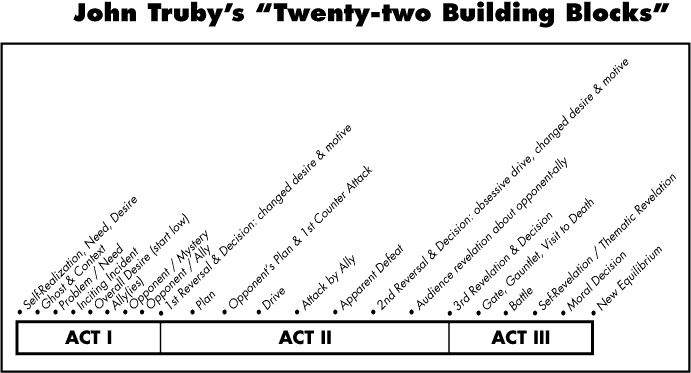
No. 6 — Structure is king
Even with such incredible source material like Dahl’s book, screenwriter Melissa Mathison had to make additions and changes to make the story into a satisfying movie with a 3-act structure.
Spielberg also wanted to further develop the relationship between Sophie and The BFG. About story structure, Spielberg has been quoted as saying, “People have forgotten how to tell a story. Stories don’t have a middle or an end any more. They usually have a beginning that never stops beginning.”
Make sure the second and third acts of your screenplay are fully developed. Act one should ask a question that gets answered in act three. In The BFG, Sophie is an orphan and wonders if she’ll ever feel part of a family in act one. In act three, we see her living in a little cottage next to the giant, with whom she has developed a very close relationship, becoming his family.
Photo courtesy: Disney Pictures
No. 7 — Read everything you can (even books!)
In addition to watching movies, it’s important to read screenplays as well. But don’t forget about books. Yes, those things collecting dust on your shelves. Reading opens your mind, stokes your creativity and helps to understand points of view that are different than your own. As Spielberg said in his 1986 Oscar acceptance speech, “But only a generation of readers will spawn a generation of writers.”  It’s true.
The BFG opens Friday, July 1.
What have you learned from Spielberg over the years? What are you favorite story moments from the iconic director?
https://www.youtube.com/watch?v=VG5MtenlP-A

Friday, July 01, 2016

CV of Allal El Alaoui in 2017

The will by Allal El Alaoui is in California


The will is selected in fan boy film festival in the states and voting will start  on the 15Th of july
http://www.fanboyfilmfestival.com/563


Congratulations on being selected to this year’s film festival!

We set out to do something special this year. We offered free submissions and are offering free streaming while awarding some pretty hefty cash prizes based on fan votes. Our mission is to create a global community of filmmakers and film fans – to create an all inclusive film festival unlimited by geography, screening schedules and the traditional Hollywood BS.  And, we’re succeeding! We are proud of each one of our selections. Each film brings its own creative style to this year’s festival.

You will find a link below to our Official 2016 Fan Boy Film Festival Laurel.

We’re a different film festival. We do not abide by the normal pomp and circumstance or etiquette of other film festivals, so naturally we have a different laurel. This laurel exemplifies the spirit of the Fan Boy Film Festival. We simply request that you do not edit the laurel. Let your film posters wear it with pride!

Festival starts July 15th, at which time fans will be able to vote on their favorite films! We encourage filmmakers to promote their films on their social media networks in order to get votes to win the cash prizes. Remember, streaming and voting is 100% free.

Saturday, June 25, 2016

The Threshold by Allal el alaoui in Argentina


Dear Sir,

We are proud to announce you that your film has been chosen to compete in the Festival´s themed section “Identitario”. The Film Festival will be in charge of the translation and subtitles of the short film, so we ask you please to send us a high quality link.

We also invite you to the 1st Edition of our Festival, to be held on Oct 6th, 7th and 8th.  2016. We work with a low budget, but we can offer you accommodation for three nights (it does not include meals or transfers). In case you need an official letter to present at Consulate, Embassy or any other organization to request economic support for the air ticket, please let us know.

Please, confirm attendance before Aug 1st. If you cannot attend, we will like to play your film and schedule a date for you to dialogue together with the audience.

Best regards,

The Team of the 1st International Festival Corporalidad Expandida.